Clay
Clay is a company developing silent speech interfaces.
The origin story
We’ve been so deep in the trenches these past 6 months, that we haven’t updated everyone as much as we should have. So, we wanted to share the crazy journey we’ve had so far and clue you into what’s next at Clay. But first, a quick recap of where we left off :)
It started back in September 2023, when we took a day-long walk at Regent’s Park. We talked about the future of computing, imagining how voice could become the way we interact with technology. But we also dug deep into personal topics - our goals, morality, and the legacy we wanted to leave on the world.
By the end of that walk, we had two convictions:
- Voice-powered interactions will make our relationship with technology seamless, natural, and magical.
- Innovation is needed to make voice interaction a practical part of our daily lives.
That’s how Clay (back then, we called it Epiph) was born. We set out to make voice-based computing private, discreet, and practical, focusing on capturing ultra-quiet whispers as a new way to interact with computers. With that, we started building like crazy - making multiple demos, testing different bio-signals, designing electrode multiplexing systems and industrial design concepts.
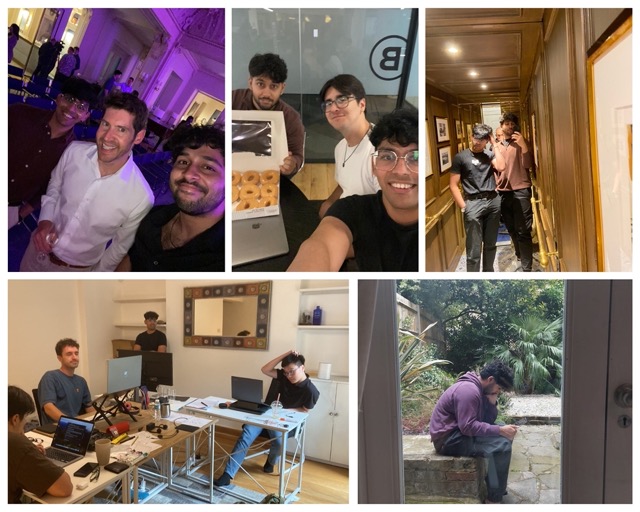
In that time, we were incredibly lucky to have Jeremy, Qing Ru and Trent as amazing supporters who believed in our vision of private, discreet interactions that created “AI in your head”. And with their help, we found ourselves presenting at the Foresight Vision Weekend (Foresight Institute) in October 2023 and winning the UCL AI Foundry pitch event in March 2024!
Through what feels like a stroke of luck, the Vision Weekend was also where we met Danielle and, later on, Harry from 1517 fund, who ended up putting in the largest angel check of $100,000 into Clay, six months ago.
That’s where we left off, before we descended deep into the trenches for 6 months of prototyping, conducting research, talking to users, and pushing the bounds of what’s possible with voice.
Build Time!
After raising the $100K from 1517, we hit a roadblock - spring break of April 2024. With our UCL attendance below 20%, we needed to pause for three weeks, cram a year’s worth of content, and sit for our third-year exams.
But, with a mission ahead and a tight timeline, we couldn’t stop for long. Our goal was to validate our technology, convert our proof-of-concept into a wearable prototype, and launch pre-orders by September. The vision? A voice-powered OS that lets you query information and take notes, coupled with ultra-quiet whisper recognition - creating the experience of “AI-in-your-head.”
We had six months, and we were going to need some help.
So we put toge/var/folders/gz/pgrxg4n51svgsyw6gfphm49c0000gn/T/TemporaryItems/NSIRD_screencaptureui_VRCUtl/Screenshot 2026-01-11 at 11.46.58 AM.pngther a dream team:
Jim Bremner: ex-Head of AI at a facial biometrics scale-up, DJ on the side, and a wizard in ML engineering. Jim worked on our whisper recognition and sensor fusion models.
Daniel Lim Hai: A brilliant course mate from UCL, skilled in 3D design with OpenSCAD and electronics engineering. He worked on the development of our hardware and form factor.
Isaac Tay: Shan’s childhood friend, who’s done ML since he was 14. Isaac flew in to London from Singapore and lived on our air mattress, just because he was excited about the vision. He worked on both our voice-OS and our whisper recognition models.
Berkay Bilik: A maths undergraduate at UCL with a talent for writing clean, beautifully modular code. He was perfect to work on our voice-OS.
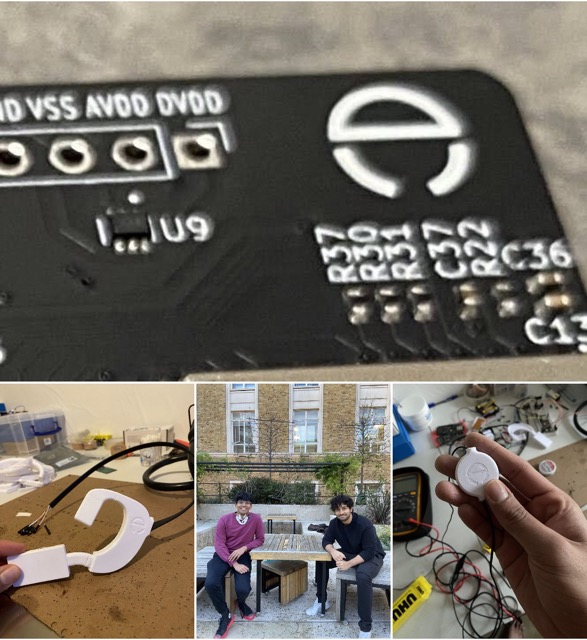
We turned Shan’s small London room into our galactic HQ. We covered the walls with whiteboard paper, set up five tables, and huddled together every Friday for an internal Demo Day, to showcase our weekly progress.
In just a month and a half, we:
- Collected over 50 hours of paired data from our vibration sensors and air microphones.
- Achieved a word recognition accuracy of over 90%, pushing the boundaries of low-volume whisper detection. It looks like telepathy, check it out in the comments!
- Developed three iterations of the hardware, each smaller and more integrated.
- Built an agent-based information retrieval and note-taking backend using Burr
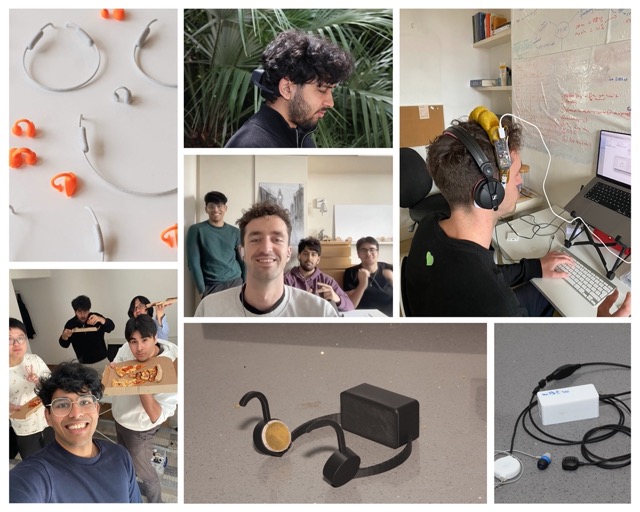
- Explored 80+ form studies, working toward a sleeker, smaller form factor.
The pace was exhilarating, and the tech felt magical. But challenges began to crop up, as they always do.
Crashing out
We met a billionaire.
At an event in Zurich, we had the incredible opportunity to speak with Tom Preston-Werner, co-founder of GitHub, whose insights were invaluable. We also connected with a former Apple Product Manager who emphasized that building a great product isn’t about flashy tech but asking the right questions. A week later, while giving an update to 1517, we also realized we were missing key answers and lacked a solid go-to-market plan, highlighting critical gaps in our approach.
There were huge gaps and this is what we realised:
- We were building in isolation, missing out on feedback from our target audience.
- A solid go-to-market plan and a clear distribution strategy is as important as building a good product.
- Our focus on tech and vision led us to overlook critical aspects, particularly understanding our users’ workflows and needs.
So we began customer discovery.
- We sneaked into WeWorks across the city to interview people(we realised no one likes donuts).
- We cold-called and emailed enterprises about their workflows (and even walked into real estate offices in West Hampstead).
- We reached out to and talked to everyone we could, sent a bunch of surveys to fill and even unsuccessfully tried social media.
The six weeks between mid-July and the end of August were, without a doubt, the most exhausting period we’ve experienced. It was a relentless cycle of ideation, invalidation, and more ideation. We were pushing hard to find the right fit for our product, but looking back, it took a serious toll on us. The burnout was real, and at times, it felt hopeless - like we were chasing something just out of reach.
As August came to a close, so did our time with the amazing team we’d built over the summer. With the season ending and the lease on our flat expiring, we decided it was time to take a step back and re-assess. We wanted to reflect on what we truly wanted to create. After countless ideas and iterations, we found ourselves questioning whether we were headed in the right direction or if we were pivoting into something entirely new - and whether that was really the path we wanted to pursue.